

Notas desde la superficie
La tercera novela de Bret Easton Ellis, American Psycho , se convirtió en el centro de una controversia previa a su publicación el otoño pasado cuando artículos en Time y Spy ofrecieron relatos de los atroces actos de violencia sexual del protagonista y Simon & Schuster abandonó los planes de publicación. Algunos comentaristas acusaron a Ellis de misoginia; otros afirmaron sus derechos bajo la Primera Enmienda (como si la Primera Enmienda otorgara a los autores el derecho a contratos con las principales editoriales de Nueva York). La novela, que fue recogida de inmediato por Random House, ahora se ha publicado como la última entrada de su serie "Vintage Contemporaries". Por supuesto, este no es el primer libro de Ellis que ha atraído una atención desproporcionadamente alta en relación con sus méritos. Su novela debut, Less Than Zero (1985), estableció al entonces estudiante de Bennington como el más prometedor de los novelistas jóvenes. Corto, rápido y deslumbrante como un video musical, el relato sin trama y en tiempo presente de Less Than Zero sobre un tal Clay, un rico universitario de Los Ángeles que se aloja para las vacaciones de Navidad, estaba hecho a medida para la generación de MTV . Clay (quien también narra) pasa sus horas de vigilia con sus vagos amigos del instituto, conversando trivialidades, escuchando rock, consumiendo drogas y teniendo sexo sin control. Vemos menos de su vida interior que de sus coches y ropa de lujo; como en una tira cómica de "Peanuts", los padres están invariablemente ausentes. En el episodio más infame de la novela, los amigos de Clay atan a una niña de doce años a una cama y la violan; su negativa a participar pretende señalarlo como el sensible.
Less Than Zero is glib, thin, shallow. If it was taken seriously by some reviewers, it was because Ellis, in showing how empty life can be for empty people—however young and rich and beautiful they may be, and however free, peaceful, and prosperous their society—was seen as making a Powerful Statement about the spiritual hollowness of contemporary American life. One might have protested that it wasn’t life, American or contemporary or otherwise, that was spiritually hollow, it was Mr. Ellis’s novel. Certainly he had loaded the dice in a big way, populating the book with the most insipid of adolescents and concentrating only on the surfaces of their lives. Though we were told that Less Than Zero constituted not a celebration of these kids but a criticism of them, one couldn’t help noticing that the readers who ate it up tended to be blank, trend-happy twentysomethings who might have been those very kids, five or ten years older and not much wiser. Nor could one help noticing that Ellis’s own life strongly resembled those of the characters he supposedly criticized. Moving from L.A. to New York, he became a fixture of the faddish downtown scene, attending parties for the likes of Robin Leach and becoming a familiar name to gossip-column readers; a Los Angeles Times reporter noted in 1987 that his “life style is so upscale that it more closely resembles a junior stockbroker’s than a writer’s.” A reader could be excused for seeing a touch of hypocrisy in Ellis’s claim that he was in the business of serious social criticism.
Then came the controversy over American Psycho, which gave his career a new lease on life.
Two years after Ellis’s first novel came The Rules of Attraction, whose extreme similarity to its predecessor (one critic dubbed it Less Than Zero Goes to College) suggested that Ellis had emptied his tiny bag of tricks and that his fifteen minutes of fame were over. Then came the controversy over American Psycho, which gave his career a new lease on life. The secret of its notoriety is simple: it’s not just more of the same, it’s a lot more of the same, taking us in the same general direction as Less Than Zero but going much further. In 399 utterly plotless pages, Ellis narrates, in the usual present-tense, first-person, nuance-free Brat Pack prose, nearly two years’ worth of selected episodes from the mostly unexceptional Manhattan-yuppie social life of its narrator-antihero, an affluent, twenty-six-year-old junior stockbroker and Harvard grad named Patrick Bateman. As in Less Than Zero, our hero’s friends are all vain, vapid, and super-privileged (one of them, in apparent homage to the movie version of Bright Lights, Big City, is named Jamie Conway), and they all dress very well, patronize the same eateries and night spots and clothing emporia, and hold the same banal conversations; once again, moreover, Ellis’s emphasis is not on the inner lives but on the household furnishings, overpriced meals, and above all the designer duds, which he catalogues exhaustively: “He’s wearing a linen suit by Canali Milano, a cotton shirt by Ike Behar, a silk tie by Bill Blass and cap-toed leather lace-ups from Brooks Brothers. I’m wearing a lightweight linen suit with pleated trousers, a cotton shirt, a dotted silk tie, all by Valentino Couture, and perforated cap-toe leather shoes by Allen-Edmonds.”
And so on for hundreds of pages, during which one has trouble believing that Bateman would be (a) so obsessive about clothing and (b) so good at naming designers and stores. Of course, Bateman’s finery fixation is deliberate on Ellis’s part. But why? Satire? Of what? Granted, many New Yorkers are designer snobs; but Bateman is too far out to be believed, and designer snobbery does not seem nearly momentous enough a phenomenon to merit such attention. Ellis’s preoccupation with it would appear to suggest that he is himself something of a designer snob. So little, in any event, do we see of the young men and women inside all that costly fabric that their names are practically interchangeable. That Bateman is continually mistaken for fellow members of the fast-track crowd makes it clear that this interchangeability, too, is deliberate on Ellis’s part; yet it makes it impossible to believe in or care about anyone.
To be sure, there are a few attributes that set Bateman apart. For one thing, he’s so handsome and hunky—a “gorgeous stud,” “total GQ”—that friends of both sexes fall for him; just as people in Less Than Zero keep telling Clay that he looks like David Bowie, so strangers keep asking Bateman if he’s a model. For another thing, Bateman’s women friends see him as sensitive (though this doesn’t come across to the reader). Oh, and there’s something else that sets Bateman apart: every so often, he commits acts of rape, torture, murder, mutilation, dismemberment, and cannibalism, mostly on attractive young women whom he has lured up to his stylish Upper East Side apartment. He describes these acts graphically and dispassionately, often juxtaposing them, for enhanced effect, with routine daily activities. (“In the kitchen I try to make meat loaf out of the girl but it becomes too frustrating . . . I rest by watching a tape of last week’s new CBS sitcom, Murphy Brown”) Ellis would have us believe that his descriptions of these outrages have a profound thematic purpose; so would the folks at Vintage, who have placed the following copy on the book’s back cover:
AMERICAN PSYCHO is set in a world (Manhattan) and an era (the Eighties) recognizably our own. The wealthy elite grows infinitely wealthier, the poor and disturbed are turned out onto the streets by the tens of thousands, and anything, including the very worst, seems possible. Even so, Bateman, who expresses his true self by torture and murder, prefigures an apocalyptic horror that no society could bear to confront. And he remains, in the end, at large. This is not an exit.
The message: this novel is serious. It is socially relevant. It has a moral design: if Ellis has chosen to write about a psychopath, it is because he reflects our society—attractive and affluent on the outside and monstrous inside. (Ellis implicitly compares Bateman, on this score, to President Reagan—who, according to one character, looks “normal” and “undangerous” but is in fact very dangerous.) Presumably to underscore Bateman’s supposed representativeness, Ellis quotes Notes from Underground in an epigraph: “such persons as the composer of these Notes not only exist in our society, but indeed must exist, considering the circumstances under which our society has generally been formed. . . . He represents a generation that is still living out its days among us.” Ellis’s placement of this extract at the head of his book is the height of audacity—not only because of the implicit comparison between himself and Dostoevsky, but because Bateman represents nothing: zip, zilch, zero. He is merely an Eighties cliche—the heartless, hedonistic Wall Street yuppie—to which Ellis has added a private life out of a slasher movie. He’s perfectly one-dimensional, and Ellis’s principal way of deflecting criticism of this one-dimensionality is to have him, toward the novel’s end, expatiate unconvincingly upon it: “[T]here is an idea of a Patrick Bateman, some kind of abstraction, but there is no real me. . . . I simply am not there. . . . My personality is sketchy and unformed, my heartlessness goes deep and is persistent.” Only in a handful of such eleventh-hour introspective passages (which are patently designed to fill in the psychology missing from the book’s first three hundred pages) does Ellis attempt to probe beneath our hero’s surface. After grinding one victim into meat patties, for instance, Bateman describes himself as
unable to find solace in any of this, crying out, sobbing “I just want to be loved,” cursing the earth and everything I have been taught: principles, distinctions, choices, morals, compromises, knowledge, unity, prayer—all of it was wrong, without any final purpose. All it came down to was: die or adapt. I imagine my own vacant face, the disembodied voice coming from its mouth: These are terrible times.
Patently, the idea here is that Bateman’s destructiveness has its origins in the world beyond himself, that he kills and cannibalizes because this is the only way for him to “adapt” to a world devoid of moral dimension or metaphysical meaning. Yet one doesn’t buy it for a minute—not because Bateman is too awful to be believed, but because Ellis has such a puerile comprehension of the nature of evil and of the human soul. Fixated on the idea that modern life is utterly meaningless—the only idea, by the way, that seems ever to have captured his imagination—he shrinks at every turn from the portrayal of purposeful activity: if Less Than Zero takes place during Christmas vacation, it is plainly because Ellis doesn’t want to show these kids doing schoolwork (nor does he provide even a glimpse of their parents working for the money that makes their self-indulgence possible); likewise, in American Psycho, he never shows Bateman or anyone else earning their six-figure salaries. In neither book does anyone go near a library, a concert, a ballet, a museum, a church; nobody does volunteer work; nobody visits a friend in a hospital. Anyone who has seen rich L.A. teenagers and Wall Street yuppies at play knows that many of them are spoiled and superficial; but one also knows how large these cities are, how many people in them lead purposeful lives, and how insignificant, in the larger scheme of things, are the trifling concerns of the sort of people over whom Ellis obsesses. Ellis is twenty-six, but his baby nihilism makes him sound more like fourteen:
[I]t did not occur to me, ever, that people were good or that man was capable of change or that the world could be a better place through one’s taking pleasure in a feeling or a look or a gesture, of receiving another person’s love or kindness. Nothing was affirmative. . . . Justice is dead. Fear, recrimination, innocence, sympathy, guilt, waste, failure, grief, were things, emotions, that no one really felt anymore. Reflection is useless, the world is senseless. Evil is its only permanence. God is not alive. Love cannot be trusted. Surface, surface, surface was all that anyone found meaning in . . .
His apparent point: that the key distinction between Bateman and the rest of us is not that he’s more brutal, but that he’s more devastated by the aloneness we all share.
Next to this, Dostoevsky sounds as upbeat as Norman Vincent Peak. One comes away from such passages with the frightening impression that, in Ellis’s mind, Bateman is a monster because he’s so sensitive—the point being that in a corrupt world it’s not the corrupt souls but those in search of meaning and spiritual sustenance who are driven to commit inconceivable acts of brutality. “Is evil something you are?” Bateman asks. “Or is it something you do?” So maybe Bateman’s not evil, but just, well, a Holden Caulfield gone berserk in the pressure cooker of Harvard and Wall Street in the Eighties. Several times, he more or less admits what he’s been up to—he tells a buddy that “I like to dissect girls” and mentions to his girlfriend his “need to engage in . . . homicidal behavior on a massive scale”—but, accustomed to violent chitchat, they think he’s joking; either that or, locked in their own worlds, they don’t really hear him. As he says to an ex-steady before nailing her to a board and cutting out her tongue: “Does anyone really see anyone else? Did you ever see me? See? What does that mean? Ha! See? Ha! I just don’t get it. Ha!”
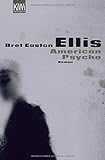
At one juncture, Ellis quotes a Madonna lyric: “life is a mystery, everyone must stand alone.” His apparent point: that the key distinction between Bateman and the rest of us is not that he’s more brutal, but that he’s more devastated by the aloneness we all share; evidently Ellis wants to shock us with the recognition that we’re more like this maniac than we’d care to admit. Yet when one looks at Bateman all one can see is Ellis, Ellis, Ellis: from start to finish, the novel reads like a highly depraved wish-fulfillment fantasy at the center of which, as in Less Than Zero, one feels that Ellis has placed someone who, with his “total GQ” looks and such, is very much the sort of gent he’d like to be. As for Bateman’s crimes, one struggles to believe that Ellis has discovered these iniquities in a universal realm, a realm larger than himself, instead of having reached into some private, grotesquely twisted part of his own being; but he doesn’t convince one for a moment that this is so. Bateman’s story is not visionary but voyeuristic, disturbing one not in a literary but in a lurid way, knocking one for a loop, like a Halloween or Friday the 13th movie, instead of hitting one where one lives, like Dante or Kafka or Heart of Darkness (or, for that matter, Dostoevsky); rather than hold a mirror up to one’s soul, Ellis gives one a window on offenses that are as deficient in symbolic resonance as they are abundant in awfulness. After reading the book, one cannot help finding a certain appropriateness in the fact that the title and the author’s name are run together on the cover with no space break or change in the typeface: AMERICAN PSYCHO BRET EASTON ELLIS. We do live in decadent times, but this novel is not an imaginative commentary on that decadence; it is a profane and witless contribution to it.
This article originally appeared in The New Criterion, Volume 9 Number 8, on page 56
Copyright © 1991 The New Criterion | www.newcriterion.com
Topics

No hay comentarios.:
Publicar un comentario